Color That Make Purple
Color That Make Purple. What color does red and purple make? Purple is made by combining red and blue light.
Color is a visual perception based on the electromagnetic spectrum. It isn't a characteristic that is inherent to matter. It is a phenomena that has been altered by a variety of elements. These factors include light reflection and absorption as well as emission and interference spectrums.
Primary colorsThe idea of primary colors has a long and rich history. Isaac Newton was one the first to define the concept. Isaac Newton coined the term "primary color" to describe sunlight. Hermann von Helmholtz attempted another attempt. His suggestion was to apply a yellowish hue.
They are the primary primary colors. These colors are essential to the human eye. Understanding how they develop is vital.
Be sure to consider any undertones that you may encounter when mixing paints. It is not a good idea to create a look that is dull or dark. The value and temperature of a primary hue can be modified by adding white or black.
Secondary colorsSecondary colors are made by mixing a primary color and secondary color. Mixing primary and second colors can result in infinite shades.
When choosing colors for your painting, a traditional color wheel is a good idea. You can make sure that your painting looks well-balanced and pleasing to the eyes by using a color wheel.
Secondary colors can increase the impact of your painting. This is particularly true when you mix secondary colors with the appropriate primary ones. You will create an amazing piece of art that will captivate people.
The most effective way to create your palette is to learn color theory. You will also be able to save time as well as money. For instance, you'll be able to select the right secondary colours for your painting.
The color theory of AristotleThe theory of color developed by Aristotle is an essential element in the development and application of numerous scientific disciplines. The book of Aristotle Colorology examines the connection between light and color. Among other things Aristotle discusses the history of colors, techniques to color, and the connections between objects and colors.
According to Aristotle the concept of color is an actuality of matter that is transparent. That means that a person's body is only colored when there is light. Aristotle however, claimed that a body may be colored even though it doesn't have to occur. He claims that a human body isn't colorable when it is in a dark space.
Aristotle views color as an ability to reflect sunlight to the eye. It is one method to understand Aristotle. It is not a false belief that some philosophers from the 17th century might have believed.
Additive mixingThere are a variety of applications that mix color include silk-screening, printing, and televisions. In general additive color mixing, it uses primary colors (red, blue, or green) as the basis, and two or more spectral color lights to produce the desired colors.
The resultant color can then be mixed with another color to make the trinity. This allows designers to create diverse color relationships. A red, green and blue mixture can produce brown hue.
It is more natural to utilize a triad rather than subtractive color mixing. It also involves different combinations of spectrals and the mixed model. In subtractive color mixing, the primary step is to connect two light sources together.
Newton's discoveries about colorIsaac Newton's discovery and subsequent publication of the color theory was an important moment in the history of the history of science. There are many nuances that aren't as clear as they seem.
Newton was a Cambridge University student who spent long hours studying the properties of light. He realized that light is composed of tiny particles. He carried out a series of experiments to discover the behavior of these particles.
He studied rainbows and found that light is generated by passing through a prism. This rainbow is made up of various colours that are later refracted into white light.
He also wrote a book titled The Book of Colours. His theories about color were explained in the book.
Learning Color: Effects of ColorA significant impact on performance and attention is triggered through color. Even though it may not be apparent, the connection is obvious. The needs of the learner will determine the colors employed in an educational setting.
The research is expanding the effects of color on learning. These studies have focused on various aspects of color, such as its ability to affect emotion, attention, and retention.
A recent study compared the effects of achromatic and color learning environments on students' cognitive performance. The results show that colour effects vary according to gender and age. In addition, more complex results can be observed when the colour is specific to the cognitive abilities of the learner.
16 rows purple color codes. What colors make dark purple. Here is a list of the more common blues and reds and their color bias.
16 Rows Purple Color Codes.
You can also achieve a light violet by using 15% lime and 85% magenta. The color purple is associated with a variety of meanings, including wisdom, creativity, royalty, power, ambition, and luxury. By layering various wavelengths of light and mixing them with a white body, this color mixing technique can help you to create any color you desire.
Colors That Go With Dark Purple.
Blue and red are essential to creating purple, but you can mix in other colors to create different shades of purple. So, your tubes of blues and. Adding just the right amount of the main yellow tone or even one of the many shades of yellow can help you change purple to a different tint.
Colors That Go With Pastel Purple.
Purple and red make magenta, which is a monotone cousin to purple. How to make purple colour by mixing two colours. Purple is made by combining red and blue light.
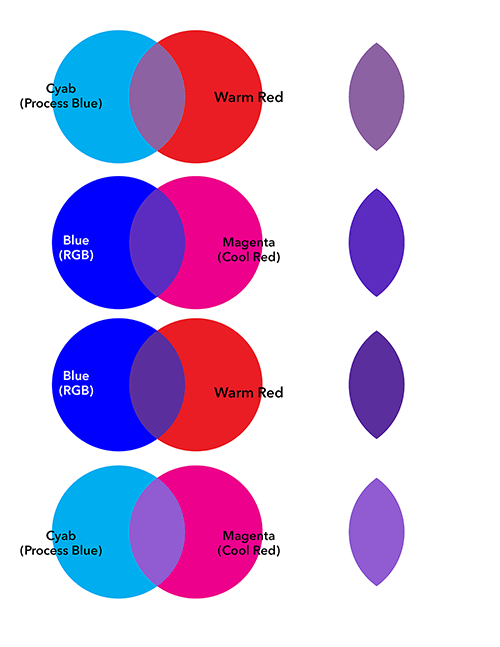
The Shade Of Purple Can Be Altered By Using The Different Reds And Blues.
Here is a list of the more common blues and reds and their color bias. There are plenty of shades of purple, which all contain their own unique color attributes. If you mix dioxagine purple with.
Adding White, Yellow, Or Gray To Your Mixture Of Blue And Red.
These purples are usually more muted and can. To create a dark purple, use a mixture of 50% cyan and 50% indigo. What color does red and purple make?