Purple And Green Make What Color
Purple And Green Make What Color. As rows two and three show in the color mixing chart above, yellow and green mixed makes green lighter as well. An interesting way to make black or gray.
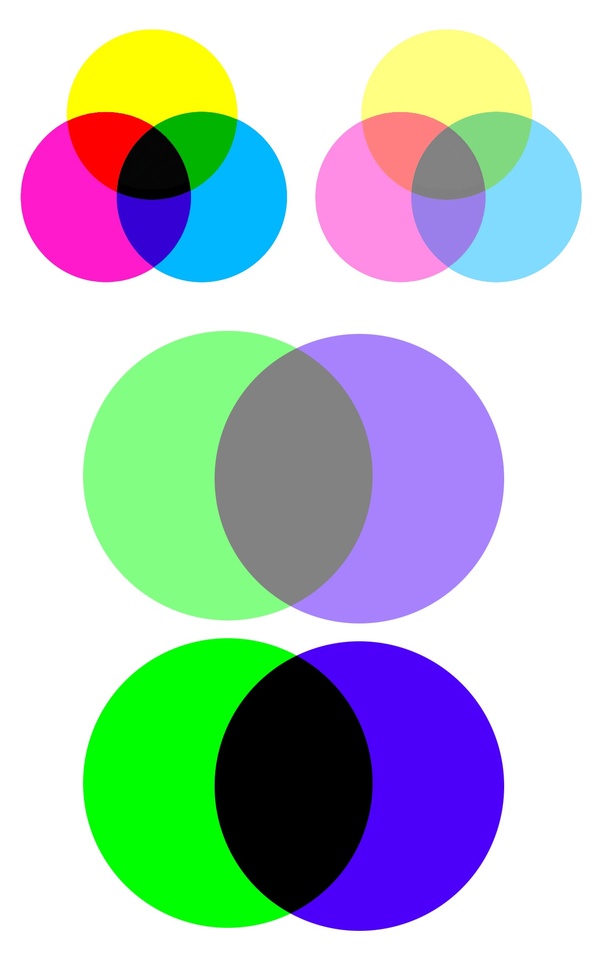
The electromagnetic spectrum is at the heart of the perception of color. It is not an intrinsic characteristic or property of the material. Instead, it is a phenomenon dependent on a variety of variables. This includes light reflection, absorption and interference spectrums.
Primary colorsThere is a long history behind the concept of primary colours. Isaac Newton was one the first to describe them. Isaac Newton coined the term "primary color" to describe sunlight. Hermann von Helmholtz attempted another attempt. His suggestion was to create the color to be yellowish.
They are the three primary primary colours. These colors are vital for the human eye. Understanding how these colors develop is vital.
When mixing paints be certain to consider any undertones. Don't mix colors that is muddy or dirty. The value of the color and its temperature will be affected if you add white or black to it.
Secondary colorsSecondary colors are made by mixing primary colors and an additional color. It is possible to create endless shades of a colour by mixing primary and secondary colors.
The traditional color wheel can help you choose the colors for your paintings. It is possible to ensure that your artwork is balanced and pleasing to the eyes by using a color wheel.
Your painting will look more intriguing if you choose to use secondary colors. This is particularly true when you mix secondary colors in conjunction with the primary ones. It will be an amazing piece of art that will captivate people.
Understanding color theory will allow you to create your perfect palette. It will help you save both time and money. For example, you will know how to select the right secondary colors for your painting.
Aristotle’s theory regarding colorThe color theory developed by Aristotle is the foundation of a variety of scientific disciplines. The book of Aristotle Colorology examines the relationship between light, color, and other aspects of life. Aristotle also explores the origins of the colors, color techniques and the connections between the colors and objects.
Aristotle says that color exists in transparent matter. This implies that light can only paint a body. Aristotle however, argued that light is not an essential condition for a body to become colored. He says that a human body won't be colored if it's located in a dark space.
Aristotle considers color to be a power that reflects sunlight to the eyes. It is one method of understanding Aristotle. It's not a phantasm like some seventeenth century philosophers may think.
Mixture of additivesThere are many applications for color additive mix which include printing, silk-screening and televisions. The additive color mixture employs primary colors (red and green or blue) for the base color. It is then combined with two or more light sources to produce the desired color.
A triad is created when the resultant color is mixed with another color. This allows designers to create different color relationships. For example the red, green and blue blend creates brown hue.
The intuitiveness of using triadic systems can make it less intuitive than subtraction mixing colors. It involves a variety of spectral combinations as well as a mix model. It is important to position two lights close to each other prior to subtractive colors being mixed.
Newton's discovery and the use of colorIsaac Newton's discovery and subsequent publication of the color theory is a significant milestone in the history of science. However, the process isn't as simple as they appear.
Newton, one of the students at Cambridge University (England), spent a lot of time researching the properties and uses of light. He discovered that light is made up of tiny particles. To determine how these particles behaved, He conducted a series of experiments.
He studied rainbows and discovered that light is created by passing through the prism. The rainbow is comprised of a range of colors that are later refracted into white light.
He also wrote a complete book about the subject, titled The Book of Colours. It contained his theories about color.
Learning effects of colorColor's power could be a significant influence on the performance and attention of learners. This connection is not obvious initially, but it's evident. It is essential to think about the needs of students when choosing the color scheme of an educational environment.
There is a growing body of research examining the effects of colors on learning. The research studies are focused on various aspects of color, including its ability affect emotion as well as attention and retention.
A study has examined the cognitive performance and environment effects of colour and achromatic colours. The results suggest that the effects of colours vary based on age and gender, and that more complex effects may occur when the color is more specific to the learners' cognitive capabilities.
1 what two colors make green?; So when you mix a small amount of. What color is made when you mix blue and green together?
Adding White, Yellow, Or Gray To Your Mixture Of Blue And Red.
The animation below right shows additive mixing. Understanding the ryb color model. As such, gray walls, furniture, and.
There Are A Number Of Ways To Mix Purple And Green To Get A Combination.
Blue and red are essential to creating purple, but you can mix in other colors to create different shades of purple. 2.2 classifying yellows from a. What colors do purple and green make?
The 3 Basic Colors, Additionally Called Primaries, Can Not Be Developed By Mixing Various Other Shades.
1 what two colors make green?; Purple + gray it’s no secret that gray is one of the most popular neutral colors. What 3 colors make all the colors on the color wheel?
The Undertones Of The Primary Color Make A Huge Difference Too.
For green and purple the answer isn’t so straightforward since the results may be different. A dark brown coat of paint provides a sophisticated, neutral backdrop for accents of dark purple and sage green in this space by. Purple is created by mixing red and blue.
Mixing Complementary Colors Will Make Each Color Less Vibrant.
In the bottom circle, the blue pixels. What color is green mixed with cyan? Purple + pink if you.