Dying Easter Eggs With Food Coloring
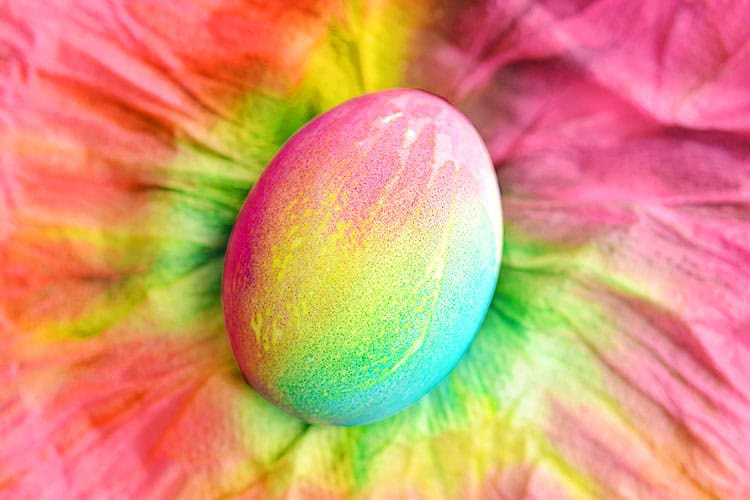
Dying Easter Eggs With Food Coloring. Drop a few drops of food coloring randomly on the outside of the filter and let it soak in for a minute or two. Place 1/2 cup tap water in containers.
Color is a visual perception built on the electromagnetic spectrum. It is not an intrinsic property or property of matter. Instead, it is a phenomenon that is caused by several elements. The factors that influence it are light reflections, absorption emission spectra and interference.
Primary colorsIt's been quite a while since the concept of primary colors was established. Isaac Newton was one of the first scientists to define them. Isaac Newton called sunlight the "primary colour." Hermann von Helmholtz also tried. His suggestion was for yellowish green.
The three principal colors are red, green, and bleu. These colors are vital for vision. It is therefore essential to know how hues are created.
When mixing paints be sure to take into consideration any undertones. You don't want to produce an unattractive or muddy color. The value and temperature of a primary hue can be altered by adding white or black.
Secondary colorsSecondary colors are created by mixing a primary color and an additional color. You can make infinite shades of a color by mixing the primary and secondary hues.
The traditional color wheel can be useful when selecting the colors for your painting. You can ensure that your work is balanced and pleasing to the eye by using a color wheel.
The use of secondary colors can give impact to your painting. This is particularly so when you combine secondary colors with the primary ones. It will create an incredible piece of art that everyone will appreciate.
Understanding the color theory can help you create your perfect color scheme. It will also help you save time and money. It will allow you to choose the right secondary colors for your work.
The theory of color developed by AristotleThe theory of color developed by Aristotle is an important element in the creation of many scientific disciplines. Aristotle's book Colorology examines the relationship between light, color, and other aspects of life. He examines among other topics, the origins and techniques of coloring and the relationships between color and objects.
According to Aristotle the concept of color is a realisation of transparent matter. This means that light can only paint a body. Aristotle stated that this is not required for a body being colored. He says that a human body will not be colored if it's in a dark space.
One way to comprehend Aristotle's view is the fact that color is a force which reflects light towards the eyes. It's not something that is a myth, like some seventeenth-century philosophers may think.
Mixing additivesThere are numerous uses of mixing color additives like silk-screening, printing televisions and silk-screening. The primary colors for additive color mixing are blue, red, or yellow. Two or more spectral lights can be utilized to produce the desired colors.
The resulting color can be mixed with a different color to make the trinity. It allows designers to design diverse color relationships. A mix of red and green produces a color known as brown.
The ease of using a triadic system could make it more difficult to understand than subtraction color mixing. It is also necessary to think about different combinations of spectral lights as well as the concept of a mixture model. In subtractive color mixing, the first step is to connect two light sources together.
Newton's discoveries on colorIsaac Newton's discovery of color can be seen is a significant discovery in scientific history. However, the specifics aren't as straightforward as they may appear.
Newton An Englishman who attended Cambridge University, spent much of his time examining the properties of light. He discovered that light is composed of tiny particles. To find out how these particles behaved the researcher conducted a series experiments.
He carried out a research study of rainbows and discovered that light that passes through a prism produces a rainbow. The rainbow is comprised of many colors, which reflect back to white light.
The author also wrote a book on the subject, which he named the Book of Colours. The theories he developed on color were explained in the book.
Learning: Effects of ColorColor's power can be a significant influence on the performance and attention of students. Even though it may not be obvious, this relationship is apparent. The color scheme chosen for an educational setting should be determined by the preferences of the students.
The study of the effects of colors on learning is increasing. The research studies are focused on a variety of aspects of color, including its ability to affect emotions as well as attention and retention.
A study that compared the effects of cognitive performance of students who learn in achromatic and color environments was published. These results suggest that there are some differences in the effects of color on gender and age and that more complex effects could occur when the colour is specifically tailored to learners their cognitive capabilities.
How to dye easter eggs without a kit: Start by pouring about 1 cup of hot water into each cup. First, add one cup of rice each to six ziploc bags or plastic cups.
Food Colouring Is An Incredibly Easy Way To Dye Easter Eggs, And It’s Something Most Of Us Already Have In Our Kitchen Cupboards.
How to dye easter eggs without a kit: Boil the eggs for 7 minutes. The acidity of the wine will be enough to dye the eggs without vinegar or a vinegar replacement.
Place 5 Drops Of Gel Paste Coloring (10 Drops For Yellow Or Light Colors), Or Use 20 Drops Of.
Color per bag, or mix the colors up to see what colors you can create. Using a spoon, lower a boiled egg into each container. Drop a few drops of food coloring randomly on the outside of the filter and let it soak in for a minute or two.
Pour 2 Tablespoons Of White Vinegar Into Each Jar, Then.
Fill each bag with ½ cup of rice. Put rice in your cup, add food coloring & vinegar, and shake up the rice with the food coloring (hold the cling wrap over the opening of. Mix one teaspoon of vinegar and 20 drops of food coloring ( use more to intensify color) in one cup of hot water in a heatproof bowl, cup, or jar deep enough to let you submerge.
Supplies For Dying Eggs With Food Coloring Water Food Coloring White Vinegar Hard Boiled Eggs (Learn How To Make The Perfect Hard Boiled Eggs With These Tips) Bowls Or Large.
Cup + cling wrap method. Place a lid on the pot and bring the water to a boil. Drop a few drops of another color in the same way without.
Allow The Eggs To Sit For 5 Minutes Or.
Refrigerate the entire pan of eggs and whipped cream for at least ten minutes. Stir in 1 tablespoon vinegar. Fill each jar halfway with about ¾ cup of hot water.