How To Blend Colors On Procreate
How To Blend Colors On Procreate. By using this site, you accept our use of cookies. Select the smudge brush that you want to use.
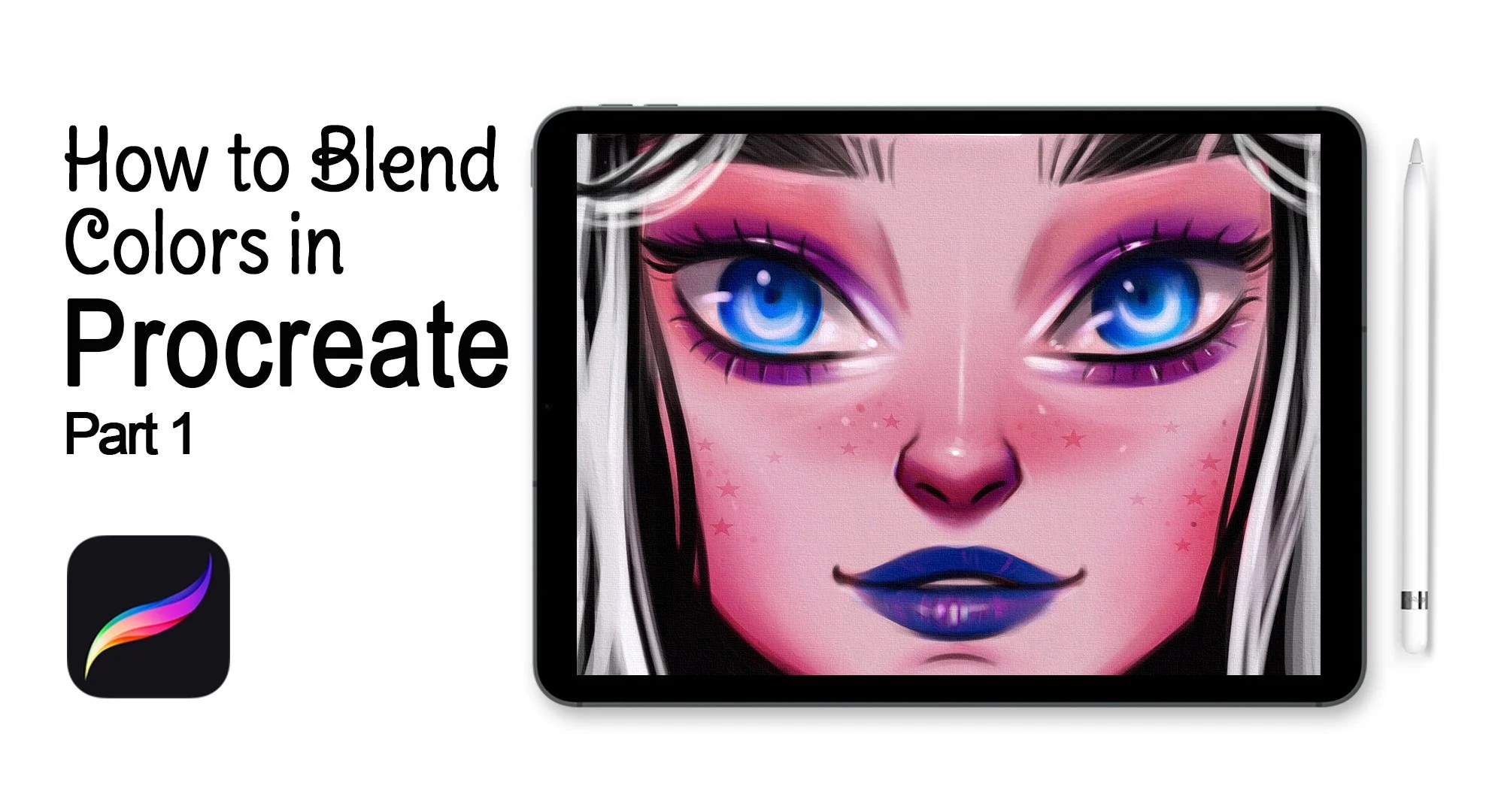
The electromagnetic spectrum is at the heart of the perception of color. It is not a property that is inherent to matter. It is a phenomena that has been influenced by a range of factors. This includes reflection of light, absorption spectrums, interference, and emission of an object.
Primary colorsThe concept of primary colors has a long-standing history. Isaac Newton was the one who first tried to establish primary colors. Isaac Newton used the phrase "primary color" to refer to sunlight. Another attempt was proposed by Hermann von Helmholtz. His proposal was for yellowish green.
They are the primary primary colors. They are vital to our eyesight. Understanding the process behind creating these colors is crucial.
Mixing paints requires you to take into consideration the undertones. You don't want to produce an unpleasant or dirty hue. The color's temperature and quality will be affected when you add white to a primary colour.
Secondary colorsSecondary colors are created by mixing secondary and primary colors. By mixing the appropriate primary colors with secondary ones you can make infinite shades of one color.
An old-fashioned color wheel may be useful in choosing the colors you'd like to use in your painting. By using a colour wheel, you will be able to ensure that your artwork is attractive and balanced to the eye.
Secondary colors can increase the effect of your painting. This is particularly true when you mix the secondary colors with the appropriate primary colors. It will create an amazing piece of art that people will love.
Understanding color theory will aid you in creating your ideal color scheme. This will help you save time and money. It will assist you in choosing the best secondary colors to paint your masterpiece.
Aristotle's theory on colorThe theory of color developed by Aristotle is an essential to numerous scientific disciplines. The work of Aristotle Colorology explores the relationship of light and color. He examines, among other things, the origins and techniques of coloring as well as the connections between colors and objects.
According to Aristotle that color is the reality of transparent matter. This implies that light can only paint a body. Aristotle declared that the body does not have to be in a dark room to be colored. He says that a human body isn't colored if it's located in a dark space.
Aristotle's perception of color is that it's the ability to reflect light towards the eyes. It isn't a phantasm like philosophers of the seventeenth century might believe.
Mixture of additivesPrinting, silk-screening, televisions, and other applications can be used to mix color. The primary colors for additive mixing of colors are blue, red or yellow. Two or more spectral light sources are employed to create desired colors.
When the color resulted is mixed with an adjacent color, a trinity is created. This allows designers create various color relations. The combination of red and green creates a color called brown.
It's more intuitive to use a triad as opposed to subtractive color mixing. Also, you will need to consider different combinations of spectral lights as well as the concept of a mixture model. When using subtractive color mixing, the primary step is to join two lights together.
Newton's discovery and the use of colorIsaac Newton's discovery of color is an important event in the history of science. However, the details may not be as simple as they appear.
Newton, a man who had studied at Cambridge University (England), was a prolific researcher investigating the properties and functions of light. He realized that light is composed mostly of tiny particles. In order to determine how these particles behaved the researcher conducted a series experiments.
He studied rainbows and found that light is created by passing through the prism. This rainbow contains many colours which are then reflected back into white light.
The author also wrote a book on the subject. It was named the Book of Colours. The theories he developed on color were explained in the book.
Learning is affected by colorColor's power can have a profound impact on the focus and performance of students. While it may not be apparent, the connection is obvious. It is important to consider the needs of students when selecting the color scheme of an educational setting.
Research is expanding on the impact of color on learning. These studies focused on different aspects of color, such as the ability of color to affect emotions and attention, as well as retention.
A recent study has compared the effects of achromatic and colour learning environments on children's cognitive performance. The results revealed that different ages and genders affect the effects of colours. They also found that students can be more prone to experiencing more complex effects when the colour they select is more specific.
These 10 tips will help you improve your blending skills!in the video i will show you how to blend using. 4 top tips for how to blend on procreate. Use wet brushes such as the turpen.
Use The Apple Pencil To Lightly Draw In The Middle Of The Shape Where You Want.
Choose the color you want to use as your blending color, and lightly draw from that color in the. This tip will help you blend colors in procreate more efficiently. 4 top tips for how to blend on procreate.
Tap The Color Selection Button In The Upper Right Corner, And Select A Bright Shade Of Blue.
Experiment with texture, brush size,. How to blend in procreate with different. The following asset was used during this procreate blending tutorial to create the piece at the end:
Of Course, After Making The Video, I Remembered A 5Th Way.
10 tips for blending in procreate. Now, we’re going to select the smudge tool. Next, tap the brush > painting >.
Make Sure Alpha Lock Is Turned On, Allowing You To Blend While Keeping The Main Circle Shape Neat And Crisp.
Open a new blank canvas in procreate, and tap the brush tool at the top of the screen. These 10 tips will help you improve your blending skills!in the video i will show you how to blend using. The second method gives you a smooth blend effect, but the first one allows you to freely blend the colors and create something awesome!
A Blend, Also Known As A Gradient, Is The Result Of Blending Two Or More Colors.
The smudge tool isn’t just useful to blend colors in procreate, you can also use it to drag colors around and paint in a sense. Don’t be afraid to experiment. It can help to blend from the darkest color to the lightest.