Color Opposite Of Pink
Color Opposite Of Pink. Opposite of a person who supports or believes in equality in the sharing of resources. What colors does pink match with?
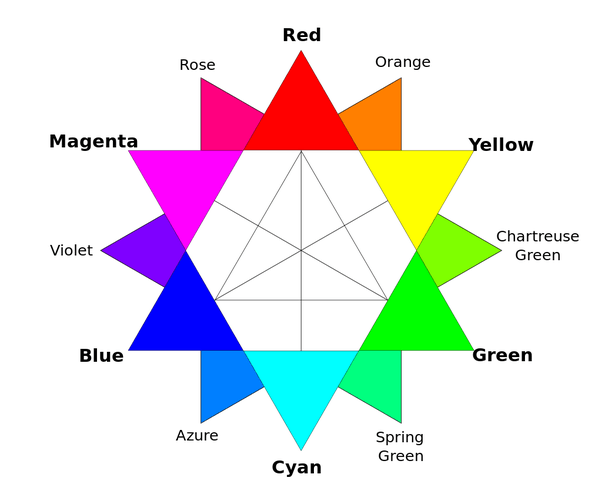
Color is a perception of color that is based on the electromagnetic spectrum. It isn't an inherent characteristic or property of the material. Instead, it is a phenomenon affected by a number of factors. The factors that influence it include light reflection, absorption and interference spectra.
Primary colorsThe idea of primary colors has a long history. Isaac Newton was one the first to explain the concept. Isaac Newton called sunlight "primary colors." Another attempt was proposed by Hermann von Helmholtz. His suggestion was to create the color to be yellowish.
The three most important colors are red blue, and green. They are the three primary colors that are essential for human vision. Understanding how colors develop is vital.
Make sure you account for any undertones you might find in the paint mix. Don't mix colors that is dirty or muddy. The addition of black or white to a primary hue will alter the temperature and value of the color.
Secondary colorsSecondary colors can be made by mixing secondary and primary colors. Mixing the right primary and secondary colors can result in infinite color combinations.
It is beneficial using a traditional color wheel when selecting colors for your artwork. A color wheel will help ensure your painting is well balanced and visually appealing.
Using secondary colors can add an impact to your painting. This is especially true of secondary colors that are combined with the primary colors you want to use. This will result in a stunning artwork that people will be sure to appreciate.
Knowing the theory behind color will help you create the perfect color scheme. It will also allow you to save time and money. You can also select the best secondary colors for your artwork.
The theory of color of AristotleThe theory of color developed by Aristotle was an essential factor in the evolution of numerous sciences. Aristotle explores the relationship between light and color in his work Colorology. He also discusses the origins and methods of coloring as well as the relationship between colors and other objects.
Aristotle said that color was the reality of transparent matter. A body can be colored when there is light. Aristotle claimed that the body does not need to be in an area that is dark to get color. He says that a human body isn't colored if it's in a dark space.
Aristotle believes that color is a power that reflects sunlight to the eye. This is one way to understand Aristotle. It is not an untruth, as some philosophers of the seventeenth century may have thought.
Additive MixingThere are a variety of applications offered for mixing colors including printing, silkscreening and even televisions. In general, additive color mixing uses primary colors (red, blue, or green) as the basis, as well as at least two or more spectral light sources to create the desired colors.
A trinity is formed by the color that is mixed with a different color. This allows designers the ability to design a range of color relationships. A red, green and blue mix can result in the brown color.
A triad's use may be more difficult than using subtractive color mixing. You will also need to consider different combinations of spectral lights and the concept of a mixture model. Two lights must be placed close together to begin subtractive mixing of colours.
Newton's discovery of colorIsaac Newton's discovery of color can be seen is a significant discovery in history science. However, the specifics aren't as simple as they seem.
Newton was a Cambridge University student who spent much time studying the characteristics of light. He realized that light is comprised of microscopic particles. A series of experiments was conducted to find out how particles behaved.
He conducted a study on rainbows to determine that light that passes through a prism creates an array of colours. The rainbow is made up of a range of colours that are then refracted to produce white light.
He also published a book called The Book of Colours. It contained a summary of his theories on the color.
Effects of color on learningA significant influence on attention and performance is triggered by the color. While this might not be obvious at first, there is a definite link. The learners' needs should be the primary factor in the color scheme utilized in the educational setting.
A growing body of research is examining the effects of color on learning. The studies looked at a variety of aspects of color's power to influence attention, emotions, and retention.
A study has evaluated the cognitive performance and learning environmental effects of color and achromatic colors. These results suggest that there are some differences in the effects of color on genders and ages, and that complex effects could occur when the colour is more specific to students' cognitive abilities.
The more pink a red is the darker the green is of the opposite. Watercolorists just need to add water. Opposite of a shade resembling such a reddish color.
The Opposite Of Pink Is Mint Green (Light Green) Because The Opposite Of Red.
Opposite colors, also known as complementary colors, are colors that have opposing wavelengths of light. Near pinks are colors that have been strongly influenced by pink but aren't a true pink.pink is a composite color that usually. You know that red is the base color of pink, therefore, a guess of some hue of green would be correct.
The Opposite Of Pink Is Green, If You Look Closely At The Color Wheel.the Opposite Of Red Is Green.the Color Of Pink Is Green Since It Is A Shade Of Red.
We can divide the color wheel into infinite numbers of times to add all gradients between these basic hues. Color that best contrast with pink (hex #ffc0cb) is #003f34, nearest color name is brunswick green. A palette of named colors that are close to pink.
Mixing Any Two Colors That Are Complementary Results In An.
Opposite of a shade resembling such a reddish color. Which color is opposite to pink? What is the opposite of rose pink?
What Colour Contrasts Against Pink?
The opposite color to pink (a tone of red) on the color wheel is green. Color that best contrast with light pink (hex #ffb6c1) is #00493e, nearest color name is brunswick green. What colors does pink match with?
The Complementary Color Of Pink Is Directly Opposite Pink On The Color Wheel, And In This Case, It Is Green.
Two colors are considered complimentary if they produce a neutral color — black, white, or grey — when mixed evenly. Cotton candy pink is close to the color of the sugary fairground treat known by the same. The more pink a red is the darker the green is of the opposite.