What Color Makes Purple
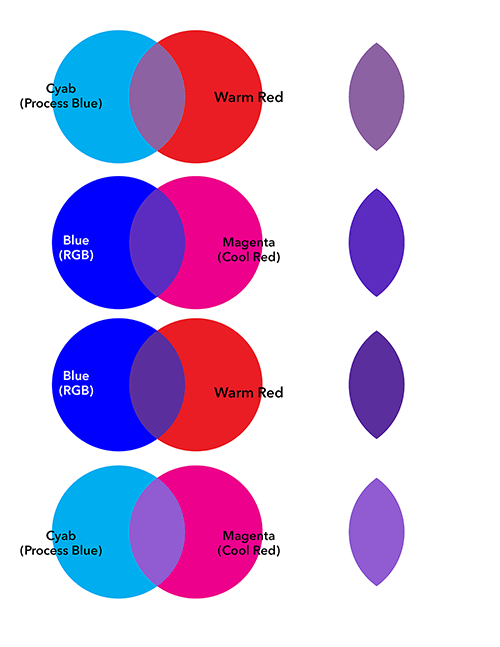
What Color Makes Purple. Web table of contents. However, you need to consider which blue to choose.
The electromagnetic spectrum is the foundation of the perception of color. It is not a fundamental property of matter, but something that is influenced by various factors. The factors that influence it are light reflections, absorption, emission spectra, and interference.
Primary colorsThe idea of primary colors has a long history. Isaac Newton was the one who first attempted to establish primary colors. Isaac Newton described sunlight as "primary shades." Hermann von Helmholtz made another attempt. His suggestion was for an orange-yellow color.
The three most important colors are red blue, and green. These colors are essential to human vision. Therefore, it is essential to know how these colors are made.
When mixing paints, be sure to take into consideration any undertones. Avoid mixing colors that is muddy or dirty. By adding black or white to a primary hue will alter the temperature and value of the color.
Secondary colorsSecondary colors can be created by mixing primary colors and an additional color. Combining the appropriate primary and secondary colors will result in endless color combinations.
The traditional color wheel could be helpful when choosing the color scheme for your painting. It is possible to ensure that your painting looks well-balanced and pleasing to the eye using a color wheel.
The secondary colors make paintings more striking. This is particularly true for secondary colors mixed with the primary colors you want to use. This will result in a stunning work of art that viewers will be sure to appreciate.
It will help you to make the ideal color palette. It can also help you save time and money. It can help you select the most appropriate secondary colors to paint your masterpiece.
Aristotle’s theory regarding colorThe theory of color developed by Aristotle is an crucial to many science disciplines. The book of Aristotle Colorology explores the connection between light, color, and various other aspects of our lives. Aristotle discusses, among others the history of color, techniques for coloring, as as the relationship between colors and objects.
Aristotle declares that color exists in transparent matter. That means that light could only color a body. Aristotle declared that light is not necessary to make a person colored. He asserts that a body will not be colored if it's located in a dark space.
One way to comprehend Aristotle's philosophy is to understand that color is a force that reflects light to the eye. It is not a phantasm, as certain philosophers of the 17th century might have believed.
Mixing additivesThere are many uses of mixing color additives, such as silk-screening, printing, and televisions. In general, additive color mixing uses primary colors (red blue, blue, or green) as the base, as well as two or more spectral color lights to create the desired colors.
A triad can be created when the resulting colour is mixed together with another colour. It allows designers to design diverse color relationships. A green, red and blue mixture can produce brown hue.
A triad is more difficult to grasp than subtractive colour mixing. It also involves different combinations of light spectral, as well as mixing models. The first step of subtractive color mixing is to place two lights near to each other.
Newton's discovery on colorIsaac Newton's discovery of color is a milestone in the science and history of science. But details are not always as simple as they appear.
Newton was a Cambridge University student who spent much time studying the characteristics of light. He discovered that light is composed of microscopic particles. He carried out a series of experiments to study how the particles behaved.
He looked at rainbows and found that light can be produced when it passes through an optical prism. The rainbow is comprised of many colors, which reflect back to white light.
He also wrote a book about the subject, titled The Book of Colours. It outlined his theories on color.
Learning Color: Effects of ColorA learner's ability to concentrate and perform well is affected by the color. This connection is not obvious initially, but it's there. The color scheme chosen for the educational environment should be determined by the preferences of the learners.
There is a growing body of research that studies the effects of colors on learning. These studies examined different aspects of color, such as the ability of color to affect emotions and attention, as well as retention.
A recent study examined the impact of colour-based learning environments as well as achromatic learning environments on the students' cognitive performance. The findings showed that students of different ages and genders have different effects on the impact of colour. They also found that learners be more prone to experiencing more complex effects when the colour they select is more precise.
This can be done in different proportions to create different shades of purple, from a deep, rich hue to a light lavender color. By mixing purple with a color that is light in value! How to make purple colour by mixing two colours.
The Best Way To Do This Is To Use The Same Color.
Color mixing is a playful way to. However, you need to consider which blue to choose. Web to make a purple color cooler, simply put in more blue color.
Web Blue And Red Are Essential To Creating Purple, But You Can Mix In Other Colors To Create Different Shades Of Purple.
We can make the color purple by mixing two primary colors, red and blue. You can also achieve a light violet by using 15% lime and 85% magenta. The important point to note is that the purple color is a combination of two major colors which are blue and red.
Web How To Make Shades Of Purple.
Web purple color is made by mixing red and blue together. Web you can easily make the light shades of purple: By mixing purple with a color that is light in value!
1.3 Purple In The Middle Ages And Renaissance.
Web click on the time stamps below to jump to the section you're interested in0:00 red and blue makes brown and not purple0:37 use magenta and blue to mix purple. Web purple is made by combining red and blue light. Web answer (1 of 34):
Another Name For Violet Is True.
1 a brief history of the purple hue: Mixing yellow and violet will give you a dark brown color as they are both complementary colors. What colors make dark purple.